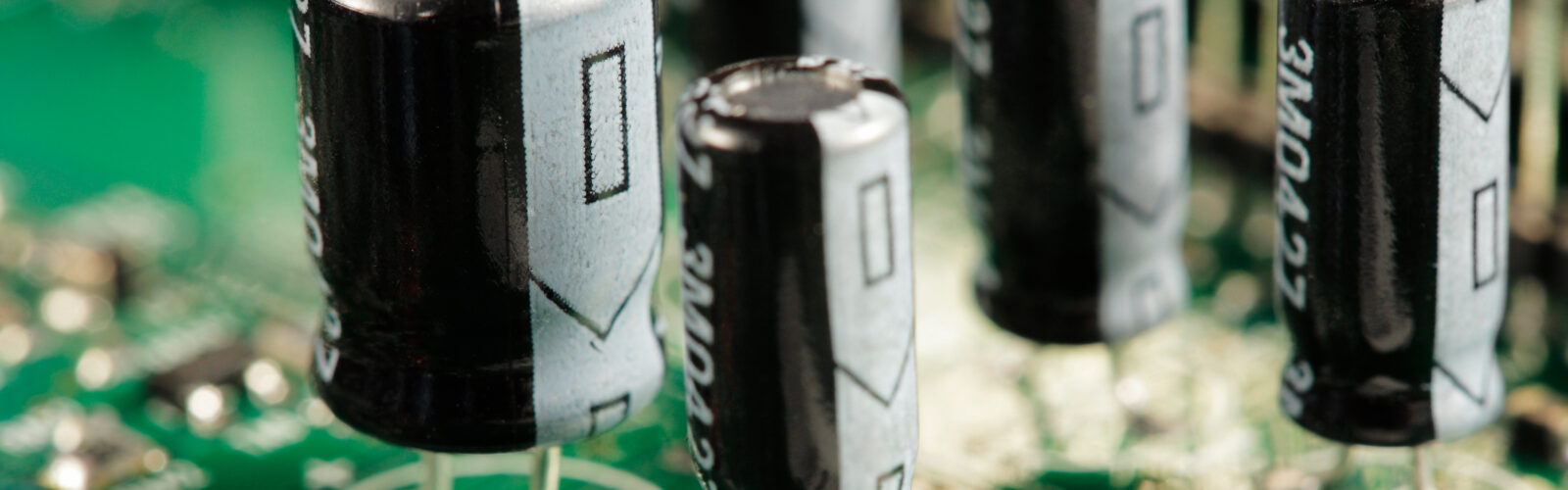
A third-year doctoral student has developed an energy storage solution that uses a naturally abundant material – clay – and engineered it to be a powerful component for electronics.
Materials science student Md Roxy Islam has created a clay supercapacitor. His work, “Flexible, Biocompatible Supercapacitors Weaved from Layered Phyllosilicates and Zwitterions via Ionicity,” was published in Angewandte Chemie International Edition. This research, two years in the making, is his first published work.
Islam is a researcher in the KM Lab, directed by Assistant Professor Kausik Mukhopadyay. He chose to attend UCF for its research capabilities and for its faculty’s strong reputation in the materials science field.
“It was Dr. Mukhopadhyay himself who sealed the decision,” he says. “The first time I talked with him, he was so welcoming, genuinely engaged and encouraging from that very first conversation and that made it clear this was a lab where I’d be supported to explore ideas.”
He says the opportunity to study the possibilities of using clay as a functional energy device was also a big driver in choosing to work with Mukhopadhyay’s research group.
“Clay minerals like bentonite are some of the most abundant, cheapest and safest materials on the planet, but they’ve historically been dead weight in electronics, brittle and electrically insulating,” he says. “That gap was the motivation: could a natural, abundant, biocompatible mineral be engineered, without any plastic or synthetic binder, into a real energy-storage device?”
Islam says the key that unlocked clay’s potential was betaine, a naturally occurring compound. Structurally, betaine is a zwitterion, a molecule that carries both a positive a negative charge. Islam and his team weaved betaine into microscopic sheets of clay, allowing for ions to flow through, to give it the needed conductivity. Adding iron and manganese ions to the layer increased its energy capacity even further.
“The result is the first supercapacitor built entirely out of clay, with no polymers, plastic binders, or toxic solvents and it’s flexible, biocompatible, and made in water at room temperature,” he says.
The group developed coin-shaped devices to test their findings using clay membranes. They found that their devices were able to retain 75% of their energy storage capacity after 30,000 charge and discharge cycles.
Islam says the technology can be used in myriad ways, and that their pioneering work has led to UCF filing two patents.
“Because the material is flexible, low-cost, and biocompatible, confirmed through cell-viability testing with fibroblasts, it points toward sustainable, low-power electronics: things like flexible or wearable sensors, and potentially biomedical devices such as implantable components, where mechanical flexibility and biocompatibility both matter,” he says.
Islam says he is grateful for the many collaborators who helped develop the capacitor, including his fellow KM Lab researchers Pritha Sarkar and Amanda Gabriela Bernard; Tanmay Sarkar Akash and Professor Siddartha Das from the University of Maryland; Josh Marsh and Neil Cunningham at the Centre for Industrial Rheology; and Gernot Rother at Oak Ridge National Laboratory.
“And above all, none of this happens without Dr. Kausik Mukhopadhyay, my advisor,” he says. “He’s the one who saw the potential in clay as an active energy material in the first place rather than just a passive filler, and who has been the driving and motivating force behind this entire line of research in the lab, from framing the scientific questions to pushing us to take the work all the way to a working device.”
- Written by Bel Huston